Showing posts with label UK visa. Show all posts

Wednesday, May 26, 2010

Elite universities ponder over 'bond issues' to raise funds


The UK's elite universities are considering proposals that would allow them to raise potentially hundreds of millions of pounds on the financial markets by issuing bonds . 

Selling the bonds – long-term debts issued by companies – would enable them to reduce their deficits and dependency on the taxpayer. A university would have to pay back, with interest, the amount it borrows – likely to be £100m or more – on a specific date in say 30 or even 50 years time. 

The Russell Group of 20 leading universities including Oxford and Cambridge state that, at present, the state does not provide sufficient funds to cover the cost of teaching undergraduates and universities are left with a shortfall. It says institutions that raised cash in this way would be far less dependent on taxpayers' money. A group of universities would allow a large bond issue, capable of attracting "major investors", it said. The bonds could even be marketed to alumni, who might be encouraged to buy them at lower than market rates. 

The Russell Group made the argument for issuing bonds in its submission to a cross-party review on university funding and tuition fees led by Lord Browne, the former BP chief executive. The review will report in the autumn. 

Fram Dinshaw, finance bursar at St Catherine's College, Oxford University, said this would be a good idea, if the loan was "properly structured", because it would be "a way out of the dependency on state funds". 

In January this year, it was revealed that Cambridge University was planning to raise up to £400m from its first bond issue. Ivy League universities in the US, such as Harvard and Princeton, have issued bonds for several years. 

One problem which may arise is that bond markets are inflexible and can make it impossible to pay back the debt early. 

courtesy Guardian.co.uk

Regulations to set 'Standards' of Universities in UK


Students have a right to expect contact time with lecturers and reasonable class sizes, says vice- chancellor 
Universities would face financial penalties if their lecturers teach for only a few hours a week, or class sizes exceed an acceptable limit as it appears in the future. Professor Paul Wellings, chair of the 1994 Group of 19 small research-intensive universities, recommended all students be given minimum expectations of contact hours with lecturers, class sizes and feedback. Wellings, the vice-chancellor of Lancaster University, was giving evidence to a cross-party review into tuition fees, led by the former BP chief executive Lord Browne. The review will report this autumn. Wellings said the Higher Education Funding Council for England, the organisation that gives public funds to universities, should issue penalties if institutions fail to live up to students' expectations will be chaged.

courtesy guardian.co.uk

Friday, May 7, 2010

Lecturers walk out in UK

Implications due to funding cuts in UK Educational system have started showing up.
Thousands of students in colleges and universities were affected by 'widespread disruption' today as planned protests took place over cuts and possible job losses

This has been the biggest outbreak of industrial action in more than two years .
Union members at 11 further education colleges and two universities in London, plus Sussex University, are taking part in the action, which will include a march and rally in Westminster this afternoon.These are the protests against funding cuts for higher education which the UCU says are nearing £1bn , on top of the £340m savings furtherwhich  education must make in the next academic year.
The London universities taking part are Westminster University and King's College London, which is seeing its second action this year.
The FE colleges are Barnet College; City and Islington College; College of Haringey, Enfield and North East London; College of North West London; Greenwich Community College; Hackney Community College; Lambeth College; Lewisham College; Richmond upon Thames College; Tower Hamlets College and Westminster Kingsway College.

Friday, April 30, 2010

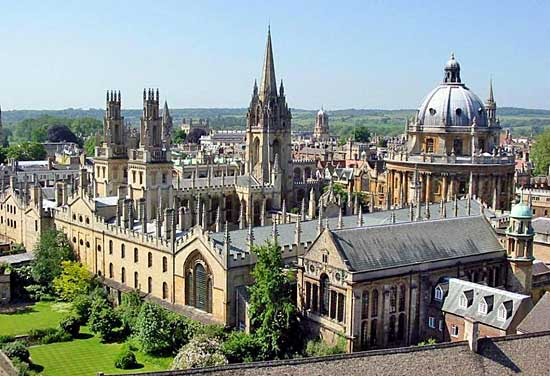
Oxford tops the Guardians University League Table


The UK's three oldest universities claim the top three positions in the Guardian university league table today, with  Oxford and Cambridge universities achieving the topmost positions. A key ingredient in their success was the very high satisfaction ratings from their students.
 All the institutions in the top 20 are strong in research - as we can see from the , where readers can compare research and teaching ratings for each subject - but that is not why they are top of the table. We judge them purely on their teaching. They would argue that their teaching is enriched by their research.
Two Scottish universities, Heriot-Watt and Robert Gordon, have jumped tremendously  up by  the ratings to 22 and 36 respectively, while as far south of the border as you get, Bournemouth is the new  favourite university at 32 (37 last year). In Wales, the revival of Lampeter on the eve of its merger with Trinity University College Carmarthen is notable.
Among the specialist institutions that are often overlooked in some tables, the music conservatoires once again dominate this league.
Courtesy Guardian.co.uk

Friday, March 26, 2010

Sense of Recognition for Overseas Students

26 March, 2010

It is appreciable of Martin Davidson , British council chief executive has raised this issue of taking care of international students rather than treating them only as for their money .
Martin Davidson, British Council chief executive, spoke as the organisation launched its international education conference “Going global”, which is being held in London on 25 and 26 March.
This conference  which will draw together some of the leading figures from international higher education to discuss issues like overseas student security, university rankings and the role of the private sector.
In the UK, it is evident that the international students have become an important source of income, a situation likely to be accentuated by government funding cuts. Here international students have to pay higher fees at undergraduate level. Fees are capped for domestic and other EU students, on the other hand there are also strict quotas limiting recruitment.
He also stressed on the fact that International students have more study options today than ever before, and in this  internet-connected world, It will be devastating if the word spreads that they are treated as ‘cash cows’. In today’s quickly  evolving marketplace, overseas governments will go against foreign universities that are clearly interested only in recruiting students from their country and giving nothing in return.
Well,  it appears that the world education scenario in UK is changing.

Friday, March 19, 2010

UK’s new tough 'Immigration' point system.

Plans outlining the criteria to  earn enough points to stay permanently in the United Kingdom were revealed by the Government today.
The new points based test for citizenship - an extension of the already successful Australian-style points based system - will give migrants points for building up different attributes and skills. Proposals launched in the new consultation would  reward  for economic contributions, skills and English language proficiency above the level already expected. Points would  be removed and citizenship delayed for those breaking the law or committing anti-social behaviour.
A points based test for citizenship will give the Government more control over the numbers of people permitted to settle here permanently, allowing the bar for settlement to be raised or lowered depending on the needs of the country and the economy.
One of the key principles of the earned citizenship system is building community cohesion, by encouraging community involvement through 'active citizenship'.
Government wants to support integration by encouraging more of  activities in which migrants contribute to the community. That is why a migrant's journey to citizenship will speed up if they conduct voluntary or civic work.
Under the current system those wanting citizenship have to pass a Life in the UK test to demonstrate both their knowledge of the country and their ability to speak English. The Government intends to present further  a new two-stage system. This will focus on practical information about life in the United Kingdom at probationary level, and then a further test at the final level stage with ask issues related to more challenging topics like history and politics.
I t is appreciable  that Government is  playing a role in managing negative impacts on developing countries.

Wednesday, February 24, 2010

UK's stricter visa rules for students.

Indian students along with other foreign students who want to study in the UK will be required to meet stricter entry criteria, the UK government British home secretary Alan Johnson announced recently. The new regulations will ensure that students studying below degree level have a limited ability to work in the UK, and that their dependants cannot work in Britain at all. It will be even harder for bogus students, whose only aim is to work in the UK, to come into the country, the British government has said. The details announced Wednesday come a week after Britain suddenly stopped issuing student visas in north India, Bangladesh and Nepal, suspecting large scale "irregularities". 

The UK Border Agency announced on Feb 1, it was not accepting any new applications under the Tier 4 student route of the points-based system at the following visa application centres: North India - New Delhi, Jalandhar and Chandigarh, Bangladesh - Dhaka, Sylhet and Chittagong & Nepal – Kathmandu.

The concerns were raised last year when a media investigation revealed that thousands of foreign nationals were residing in the UK under the false cover of bogus universities in the cities of London, Manchester and Bradford. The home secretary also confirmed that the government will implement plans to introduce a points test by 2011 for those who wish to earn British Citizenship.  Johnson said: "The Points Based System was introduced to provide a rigorous system to manage legitimate access to the UK to work and study, with the ability to respond to changing circumstances. We want foreign students to come here to study, not to work illegally, and today we have set out necessary steps which will maintain the robustness of the system we introduced last year. I make no apologies for that." 

The new measures include: 

* A good standard of English (equivalent of holding just below a GCSE in a foreign language) will be needed to come to the UK and study to improve English language competency further; 

* A good standard of English (again equivalent of holding just below a GCSE in a foreign language) will need to be demonstrated in order to study any other course below degree level; 

* Restricting the lowest level courses (A-levels and equivalent) to only the most trusted institutions; 

* Halving the amount of time a student studying below first degree level or on a foundation degree course, will be able to work, to just ten hours during term time; 

* A ban on bringing in dependants for anyone studying a course for less than six months; and 

* A ban on dependants of anyone studying a course lower than foundation or undergraduate degree level from working - they will face removal from the UK if found doing so. 

* A ban on foreign students studying below degree level if the course includes a work placement - unless that course is being provided by a university, college or training provider which has the status of "highly trusted sponsor"; 

* A requirement for students to demonstrate their English language ability by passing an approved secure test - this will apply to all students studying below (foundation) degree level, including those coming to study English language; and 

* Introduction of tougher criteria for defining which course providers count as "highly trusted sponsors" of foreign students. We expect that all publicly funded universities and colleges will count as highly trusted, and we will ensure that there is a rapid but rigorous system for ensuring that private training colleges can also gain that status as soon as possible. 

CRACK DOWN ON POTENTIAL ABUSE OF THE SYSTEM

The UK government said it "recognises the essential contribution genuine international students bring - economically, academically and socially - to the country as a whole, as well as to the universities and colleges in which they study. "However these steps are part of the government's commitment to crack down on potential abuse of the system." These changes are part of a radical overhaul of the student system that began last year. Since March 2009, the government has required all foreign students to be sponsored by a UK Border Agency licensed college and to demonstrate they can support themselves once they get here before being granted a visa. Also since March, any college or university wanting to bring in international students must be accredited and licensed. This has reduced the number of institutions able to bring students to the UK from over 4,000 to approximately 2,000.  Alan Johnson said: "We have already made fundamental changes to the immigration system to control migration in a way that is firm, and has a positive impact on our work force and economy. From 2011 we will put the mechanisms in place that will ensure that people who are allowed to become citizens have earned their right to stay here. We will do this using a points test, giving us the ability to take clear, enforceable decisions about who should be allowed to stay permanently, with the flexibility to raise or lower the threshold for citizenship, depending on the current interests of the country and economy."  Under the new rules anyone wishing to become a permanent resident will have to earn their right to citizenship. This will restrict the number of economic migrants granted citizenship, for example by limiting it only to those who have the qualifications or skills that the economy needs, or are living in parts of the country where there are specific skills shortages that they can fill.  They will also have to demonstrate that they could speak good English for their application to be successful. 


Confirmation of Acceptance for Studies (CAS) 

Beginning February 22, all applicants for clearance to study in the UK will be required to have a special virtual number known as the Confirmation of Acceptance for Studies (CAS) from their prospective sponsors. That number will be obtained from the central admissions teams that issue students with unconditional offers to study in their respective colleges confirming that they qualify to pursue the specified course. Once a student accepts such an offer, he or she will be contacted to ascertain the veracity of information provided during the application, paving the way for her to be issued with a special CAS from the university in which they wish to study and provide all information needed to apply for a visa such as the start and end dates for academic course, fees and documents used to assess their eligibility. The information will be uploaded on the UK government's electronic data management system where it will be shared among the various departments, including the UK Border Agency (UKBA) to help track the immigrants. The data will also be useful for security agencies that will use it to track the aliens' activities while they are in the UK. This means, the CAS virtual number and will replace the visa letter that is currently used to support applications to enter the UK for studies or in the case of visa extensions, to continue their studies in the UK.


Wednesday, January 20, 2010

Are you aware of the future which you thought to be a smooth ride?

whenever i see advertisement of any company which offers the students to get admission in UK universities without IELTS, sometimes i think students are not going to learn anything there but just going for an adventurous trip to visit that country.
Isn't it?
First Let's see that what IELTS is all about?
The government of the countries conducting IELTS are not creating a sort of psychological barrier but actually they want to make it sure thatwhen you reach their country you are able to interact with their citizens, which is necessary for your studies and progress. How can you study or do anything igf you dont know the language of that particulatr country. I fail to understand such an issue.

If any foreigner comes to Our Country ,wouldn't we like him to talk to us in Hindi ?.
Recently we heard one student is returned from the Airport just because that person was not even able to talk in english properly, then what is the use of all such international studies which you think to do, investing your precious mudra and resources.

I think this is all fun but not serious study.YOU can go, there is no problem but better go through proper channels only. One can go without IELTS but but i would call it an adventure rather than a serious study tour.
I hope students understand.