Showing posts with label Media Department Kampus Landing- Global Education Specialists. Show all posts

Saturday, May 15, 2010

Indian version of TOEFL

New Delhi, May 11 - With the demand for English language skills increasing across the country, India has come up with its own standardised English language test on the lines of TOEFL and IELTS.
 
The English and Foreign Language University in Hyderabad has formed the All-India English Language Testing Authority that will conduct the first standardised test on May 30. "Both TOEFL and IELTS are tests needed by the US and the UK respectively for students and professionals wanting to study or work in those countries. It is not taken widely by Indians or even those wanting a proficiency certificate for the Indian market," said Vice-Chancellor Abhai Maurya.

The tests will have three levels - Class X, graduation and post-graduation - and students will be awarded proficiency certificates. "We are already in talks with the CBSE (Central Board of Secondary Education) to conduct an English proficiency test for Class X pass-outs since they will have no board exam from this year," said Maurya.

At Rs 1,500 the test is much cheaper than its foreign counterparts, which cost around Rs 8,000 per sitting. The test will include reading and writing and subsequently test speaking and listening skills. The testing authority is also talking to University of Cambridge, which conducts various assessment tests worldwide.

Government schools have also woken up to the importance of teaching students the Queen's language. Seven states, including Delhi, Tamil Nadu, Kerala and Punjab, have tied up with the British Council, India, to train their English teachers.Government sources
 

Friday, May 7, 2010

Lecturers walk out in UK

Implications due to funding cuts in UK Educational system have started showing up.
Thousands of students in colleges and universities were affected by 'widespread disruption' today as planned protests took place over cuts and possible job losses

This has been the biggest outbreak of industrial action in more than two years .
Union members at 11 further education colleges and two universities in London, plus Sussex University, are taking part in the action, which will include a march and rally in Westminster this afternoon.These are the protests against funding cuts for higher education which the UCU says are nearing £1bn , on top of the £340m savings furtherwhich  education must make in the next academic year.
The London universities taking part are Westminster University and King's College London, which is seeing its second action this year.
The FE colleges are Barnet College; City and Islington College; College of Haringey, Enfield and North East London; College of North West London; Greenwich Community College; Hackney Community College; Lambeth College; Lewisham College; Richmond upon Thames College; Tower Hamlets College and Westminster Kingsway College.

Friday, April 30, 2010

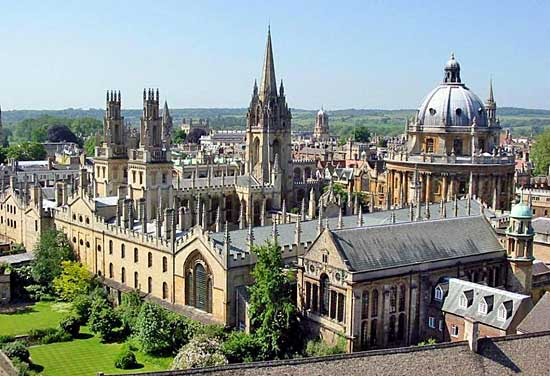
Oxford tops the Guardians University League Table


The UK's three oldest universities claim the top three positions in the Guardian university league table today, with  Oxford and Cambridge universities achieving the topmost positions. A key ingredient in their success was the very high satisfaction ratings from their students.
 All the institutions in the top 20 are strong in research - as we can see from the , where readers can compare research and teaching ratings for each subject - but that is not why they are top of the table. We judge them purely on their teaching. They would argue that their teaching is enriched by their research.
Two Scottish universities, Heriot-Watt and Robert Gordon, have jumped tremendously  up by  the ratings to 22 and 36 respectively, while as far south of the border as you get, Bournemouth is the new  favourite university at 32 (37 last year). In Wales, the revival of Lampeter on the eve of its merger with Trinity University College Carmarthen is notable.
Among the specialist institutions that are often overlooked in some tables, the music conservatoires once again dominate this league.
Courtesy Guardian.co.uk

Wednesday, April 21, 2010

Consider all the Parameters before you join any 'University or College'.


Lot of Students ask about the various crucial decisions of their life like carreer which college to join or which course of education should be taken so as to build the career .My advice is to follow your heart’s desire that is what you feel like doing brilliantly in any field. If you feel that you are artistic go for arts and vice versa. However there are some problems like selection of colleges in India or foreign countries . 


A lot of general information is available about the humanities and the perceived rankings of graduate programs and universities. Most academics are able to assess the relative merits of the faculty in one department versus another—at least in our particular subfields. We can also visit Web sites and find out the features of programs, which are generally presented in the most positive terms. 


But, one should get some reliable, recent, and specific information about individual graduate programs, since perceptions about the relative merits of programs are often based on vague—and possibly dated—reputational capital. Useful information, such as attrition rates, are generalized for the entire profession so that one can't use such data to compare programs. And while some programs provide information about placement rates of their graduates in academic positions, that hardly presents the whole picture, and the methods used are inconsistent. 


You often hear that students should consider going to a graduate program in the humanities only if they get into a top-20 program. But there are underfinanced programs in the top 20 that have high attrition rates, heavy student workloads, and, for a variety of interconnected reasons, poor placement records. Those programs prepare their students for positions at research universities (for which they may not be competitive) and teach them to shun other opportunities. The majority of teaching jobs are at non-elite colleges, but hiring committees at those colleges share the bias toward the elite and too often assume that a candidate from a top program doesn't really want to teach at a lesser-ranked campus and will leave as soon as possible. 

Sometimes elite universities do not properly prepare students for the academic job market,nd sometimes departments promote a small number of star students and invest minimal effort in the rest of the cohort. 

Knowledge about such distinctions, however, is hard to acquire. It requires an extensive web of contacts and information sources that is nearly impossible to sustain outside of the most active centers of the profession. 

How many students are bold enough to ask the chair of a department to provide some hard data about a program? They can visit a department and talk to its students, but how do they contact former graduate students—typically, the majority—who left without completing their degrees? 


Typically, students feel grateful to be admitted to graduate school, and they go in with their eyes half shut. Sometimes it works out; more often, it doesn't. A lot of luck is involved. And it's much easier to talk about contributing factors in retrospect, perhaps 10 years later, than it is to predict the outcome of a program one is about to enter. 

The problem is that most applicants to graduate programs lack the most crucial information, and so do the people they trust and turn to for advice. 


Admissions: How many applications does your program receive each year? How many students are accepted? How many enroll? 


Aid for students: What kind of financial support can a student expect to receive during the entire course of the program? What is the cost of living in the area? How much educational debt have students accumulated, on average, by the time they graduate? 


Teaching: How many discussion sections and courses are graduate students required to teach in order to receive a stipend in each year of the program? What is the average teaching load in each year of the program? 


Attrition: What percentage of students enrolled in the program eventually earn doctorates? How many leave with master's degrees? At what point do most drop out? What are the reasons given, if any (i.e., money, concerns about job market, seeking other opportunities, family responsibilities, etc.)? 


Time taken to complete the degree: How many years does it take to graduate on average (not ideally, but in reality)? 


Placement:  Where, exactly, is every graduate employed in academy (and in what kinds of positions: tenure track, visiting, adjunct, etc.)? Who was their dissertation adviser? What were their subfields? Does the program also lead to appealing career paths outside of academe? 


On many department Web sites, you will find information about successful recent placements, but the methods are not comparable or verifiable, and leave out far more than they include. Only when you see all of the categories of program assessment together, compiled over many years (five, at least), do you begin to be able to discern which programs are healthy—maybe even nurturing the "life of the mind"—and which ones are somewhere along the spectrum toward dysfunctional and even exploitative. 

The value of such information for advising undergraduates would be enormous, and it could place positive pressures on universities to accelerate time to degree, reduce debt, curtail attrition, and, perhaps, encourage institutions to reduce their reliance on contingent labor. 

There may also be some external ways to encourage participation. Professional organizations like the American Association of University Professors, the Modern Language Association, and the American Historical Association could publicize the most effective programs, recognize the most improved, and censure the worst or the ones that refuse to participate. 

Remember prevention is better then cure and so we must acquire all the information which we can in order to have a safe admission in any university or college in other country.

Tuesday, April 20, 2010

FulBright Grant Program of USA Government.

The flagship international exchange program sponsored by the United States Government, theFulbright Program is designed to increase mutual understanding between the people of the United States and the people of other countries. It promotes leadership development through learning and international cooperation. The Fulbright Program operates in more than 155 countries and has provided over 285,000 participants — chosen for their academic merit and leadership potential — with the opportunity to study, teach and conduct research in each others' countries and exchange ideas. Approximately 7,000 grants are awarded annually. 

USIEF has been basically awarding grants to students of USA and other countries. 

Since its inception in 1950, the United States-India Educational Foundation(USIEF) has awarded over 4,550 Fulbright grants to Indians in almost every field of academic endeavor. USIEF's grants are for leadership development in three main sectors: research; lecturing to promote mutual understanding in area studies (both American and Indian) as well as in areas of contemporary relevance to the U.S. and India; and professional training in newly emerging areas of importance to India such as environmental sciences and agriculture. 

United States-India Educational Foundation (USIEF) has also on the other hand awarded approximately 2,800 Fulbright grants to U.S. citizens in almost every field of academic endeavor. USIEF's grants are for leadership development in three main sectors: research; lecturing to promote mutual understanding in area studies (both American and Indian) as well as in areas of contemporary relevance to the U.S. and India; 

The Fulbright Foreign Student Program is administered by the Fulbright Commissionor U.S. Embassy in each country. Approximately 1,650 new awards are awarded to foreign graduate students for support at U.S. universities, and some 1,300 renewal awards are also made annually. 

Following are two major awards given to students of the various countries. 

International Fulbright Science and Technology Award 
The International Fulbright Science and Technology Award, a component of the Fulbright Foreign Student Program, is for doctoral study at prestigious U.S. institutions in science, technology, or engineering for up to 40 outstanding foreign students. 

Fulbright Foreign Language Teaching Assistant Program (FLTA) 
The Fulbright FLTA Program provides young teachers of English as a Foreign Language the opportunity to refine their teaching skills and broaden their knowledge of American cultures and customs while strengthening the instruction of foreign languages at colleges and universities in the United States. 

Thursday, April 15, 2010

Prasun chatterjee


April 8, 2010

Washington :  Prasun Chatterjee, an Indian environmental engineering student whose research has contributed to a new way of detecting toxic lead and copper in water, has been awarded the best research honour.Chatterjee, a research student at the University of Lehigh, Pennsylvania, will be awarded  the 2010 C. Ellen Gonter Environmental Chemistry Award from the American Chemical Society's (ACS) Environmental ChemistryDivision when ACS holds its fall national meeting in Boston in August. Chartered by the US Congress, ACS is the world's largest scientific society and the premier international organization for chemists, chemical engineers and related professions. The Gonter award, named after a noted research chemist and consultant, is given to a graduate student for an outstanding research paper. Chatterjee, who received his BS and MS in chemical engineering from Jadavpur University in India and is hoping to complete his PhD in environmental engineering this year. 

He will deliver the invited Gonter lecture, "Rapid Detection of Toxic Metals in Water through pH Changes Using a Novel Hybrid Material." 

Chatterjee's doctoral research has led to the development and synthesis of an inexpensive inorganic material that can detect toxic lead or copper in water at the parts-per-billion level by using a pH meter or pH paper. Chatterjee is also co-inventor of a technology called "Rapid Sensing of Toxic Metals through Use of Hybrid Inorganic Materials," for which a US patent has been applied.

Students in Lehigh's freshman engineering projects classes use hybrid inorganic materials to make easy-to-use gadgets that detect toxins in drinking water. 

Thursday, March 18, 2010

American Education System

Generally children in USA start school at the age of five years which is also known as kindergarten.The second year at school is considered is known as first grade. In America, the word grade has two meanings: (1) the score achieved on an exam or in a course, and (2) a year of education in primary or secondary school.Primary school most commonly consists of fifth grades i.e five yearsof education.

Secondary school
Upon completion of fifth grade (the last year of primary school), American children studying in the American education system enters into secondary school. Secondary school most commonly consists of a total of seven years, referred to as sixth through twelfth grades. The ninth through twelfth grades are most commonly referred to as high school. After completing the twelfth grade, American students are awarded a certificate called the high school diploma. In the American education system, students must have obtained a high school diploma before they are admitted into college or university. Foreign students who would like to attend an American college or university must have completed coursework that is equivalent toeducation programme in an  American high school.
Undergraduate school
Students who would like to attend college or university must attend what is referred to as an undergraduate school. These are schools that offer either a two-year degree (called an associate degree) or a four-year degree (called a bachelors degree) in a particular course of study. That course of study is called the major.Alll students are required to select (or declare) a major by their second year at school. Students who complete an associate degree can continue their education at a four-year school and eventually complete a bachelor degree.

Graduate school
Students who have obtained a bachelor’s degree can continue their education by going through one of two types of degrees. The first is a master’s degree. This is generally a two-year degree in a highly specialized  specific field. Students are sometimes admitted to a master’s degree program only if they have a bachelor’s degree in a closely related field. However, there are few  exceptions like the students want to study a Master’s in Business Administration (MBA) degree. Certain courses of study are only available at the graduate school level in America. The most important are of  law, dentistry, and medicine. Students who want to go through degree in one of these fields must first obtain a bachelor’s degree.

Wednesday, March 17, 2010

SAT-Like Admissions Test will soon be used to get admissions in universities.

The country's minister in charge of higher education has asked 15 universities which will be established in future   to formulate a common admission test akin to the SAT in the United States, according to a government statement.
The common examination would later be put in to the system by 25 other federally supported universities as well, reported the Business Standard, a newspaper.The  higher-education budget is increased by an unprecedented 40 percent, to $3.1-billion, for 2009-10.
Every Indian university currently admits students based on their marks on a high-school-graduation exam and, occasionally, a personal interview. As a result, a student from, say, the northern Indian state of Uttar Pradesh who applies to the Universities of Delhi and of Bombay must visit both distant cities and be judged by different standards at both institutions and he has to suffer a lot .
In addition, too much tests taken for  high-school-graduation  in India makes it extremely difficult to gauge a student's relative abilities. For that reason, the higher-education minister, Kapil Sibal, has also announced plans to devise a common high-school-graduation test.

Wednesday, February 24, 2010

UK's stricter visa rules for students.

Indian students along with other foreign students who want to study in the UK will be required to meet stricter entry criteria, the UK government British home secretary Alan Johnson announced recently. The new regulations will ensure that students studying below degree level have a limited ability to work in the UK, and that their dependants cannot work in Britain at all. It will be even harder for bogus students, whose only aim is to work in the UK, to come into the country, the British government has said. The details announced Wednesday come a week after Britain suddenly stopped issuing student visas in north India, Bangladesh and Nepal, suspecting large scale "irregularities". 

The UK Border Agency announced on Feb 1, it was not accepting any new applications under the Tier 4 student route of the points-based system at the following visa application centres: North India - New Delhi, Jalandhar and Chandigarh, Bangladesh - Dhaka, Sylhet and Chittagong & Nepal – Kathmandu.

The concerns were raised last year when a media investigation revealed that thousands of foreign nationals were residing in the UK under the false cover of bogus universities in the cities of London, Manchester and Bradford. The home secretary also confirmed that the government will implement plans to introduce a points test by 2011 for those who wish to earn British Citizenship.  Johnson said: "The Points Based System was introduced to provide a rigorous system to manage legitimate access to the UK to work and study, with the ability to respond to changing circumstances. We want foreign students to come here to study, not to work illegally, and today we have set out necessary steps which will maintain the robustness of the system we introduced last year. I make no apologies for that." 

The new measures include: 

* A good standard of English (equivalent of holding just below a GCSE in a foreign language) will be needed to come to the UK and study to improve English language competency further; 

* A good standard of English (again equivalent of holding just below a GCSE in a foreign language) will need to be demonstrated in order to study any other course below degree level; 

* Restricting the lowest level courses (A-levels and equivalent) to only the most trusted institutions; 

* Halving the amount of time a student studying below first degree level or on a foundation degree course, will be able to work, to just ten hours during term time; 

* A ban on bringing in dependants for anyone studying a course for less than six months; and 

* A ban on dependants of anyone studying a course lower than foundation or undergraduate degree level from working - they will face removal from the UK if found doing so. 

* A ban on foreign students studying below degree level if the course includes a work placement - unless that course is being provided by a university, college or training provider which has the status of "highly trusted sponsor"; 

* A requirement for students to demonstrate their English language ability by passing an approved secure test - this will apply to all students studying below (foundation) degree level, including those coming to study English language; and 

* Introduction of tougher criteria for defining which course providers count as "highly trusted sponsors" of foreign students. We expect that all publicly funded universities and colleges will count as highly trusted, and we will ensure that there is a rapid but rigorous system for ensuring that private training colleges can also gain that status as soon as possible. 

CRACK DOWN ON POTENTIAL ABUSE OF THE SYSTEM

The UK government said it "recognises the essential contribution genuine international students bring - economically, academically and socially - to the country as a whole, as well as to the universities and colleges in which they study. "However these steps are part of the government's commitment to crack down on potential abuse of the system." These changes are part of a radical overhaul of the student system that began last year. Since March 2009, the government has required all foreign students to be sponsored by a UK Border Agency licensed college and to demonstrate they can support themselves once they get here before being granted a visa. Also since March, any college or university wanting to bring in international students must be accredited and licensed. This has reduced the number of institutions able to bring students to the UK from over 4,000 to approximately 2,000.  Alan Johnson said: "We have already made fundamental changes to the immigration system to control migration in a way that is firm, and has a positive impact on our work force and economy. From 2011 we will put the mechanisms in place that will ensure that people who are allowed to become citizens have earned their right to stay here. We will do this using a points test, giving us the ability to take clear, enforceable decisions about who should be allowed to stay permanently, with the flexibility to raise or lower the threshold for citizenship, depending on the current interests of the country and economy."  Under the new rules anyone wishing to become a permanent resident will have to earn their right to citizenship. This will restrict the number of economic migrants granted citizenship, for example by limiting it only to those who have the qualifications or skills that the economy needs, or are living in parts of the country where there are specific skills shortages that they can fill.  They will also have to demonstrate that they could speak good English for their application to be successful. 


Confirmation of Acceptance for Studies (CAS) 

Beginning February 22, all applicants for clearance to study in the UK will be required to have a special virtual number known as the Confirmation of Acceptance for Studies (CAS) from their prospective sponsors. That number will be obtained from the central admissions teams that issue students with unconditional offers to study in their respective colleges confirming that they qualify to pursue the specified course. Once a student accepts such an offer, he or she will be contacted to ascertain the veracity of information provided during the application, paving the way for her to be issued with a special CAS from the university in which they wish to study and provide all information needed to apply for a visa such as the start and end dates for academic course, fees and documents used to assess their eligibility. The information will be uploaded on the UK government's electronic data management system where it will be shared among the various departments, including the UK Border Agency (UKBA) to help track the immigrants. The data will also be useful for security agencies that will use it to track the aliens' activities while they are in the UK. This means, the CAS virtual number and will replace the visa letter that is currently used to support applications to enter the UK for studies or in the case of visa extensions, to continue their studies in the UK.


Wednesday, December 30, 2009

Presentation and Interviews- Stevens Institute of Technology, NJ


Presentation and Interviews- Stevens Institute of Technology, NJ

On 10th January, 2010
8.00 am to 11.00 pm
at Kampus Landing Ahmedabad Office (079- 30022253)
Dr. Maureen Weatherall, Vice President of University Enrollment and Administration, Stevens Institute of Technology, NJ

All staff members are instructed to come sharp at 7:45 am. Please note that 10th January is a Sunday.

All students following this blog who have applied to Steven Institute of Technology and are awaiting I 20 are welcome to meet Dr. Maureen Weatherall, Vice President of University Enrollment and Administration, Stevens Institute of Technology, NJ. Further, you may bring your friends to the presentation as well.